
The complete guide
The Ultimate Guide to Choosing a Weather Station
A home weather station does something a phone app can't: it tells you the weather exactly where you are, right now, at a glance — no unlocking, no loading, no regional average. But "weather station" covers everything from a £30 thermometer to a full observation post on a pole. Here's what actually matters when you choose.
Decide what you want to measure
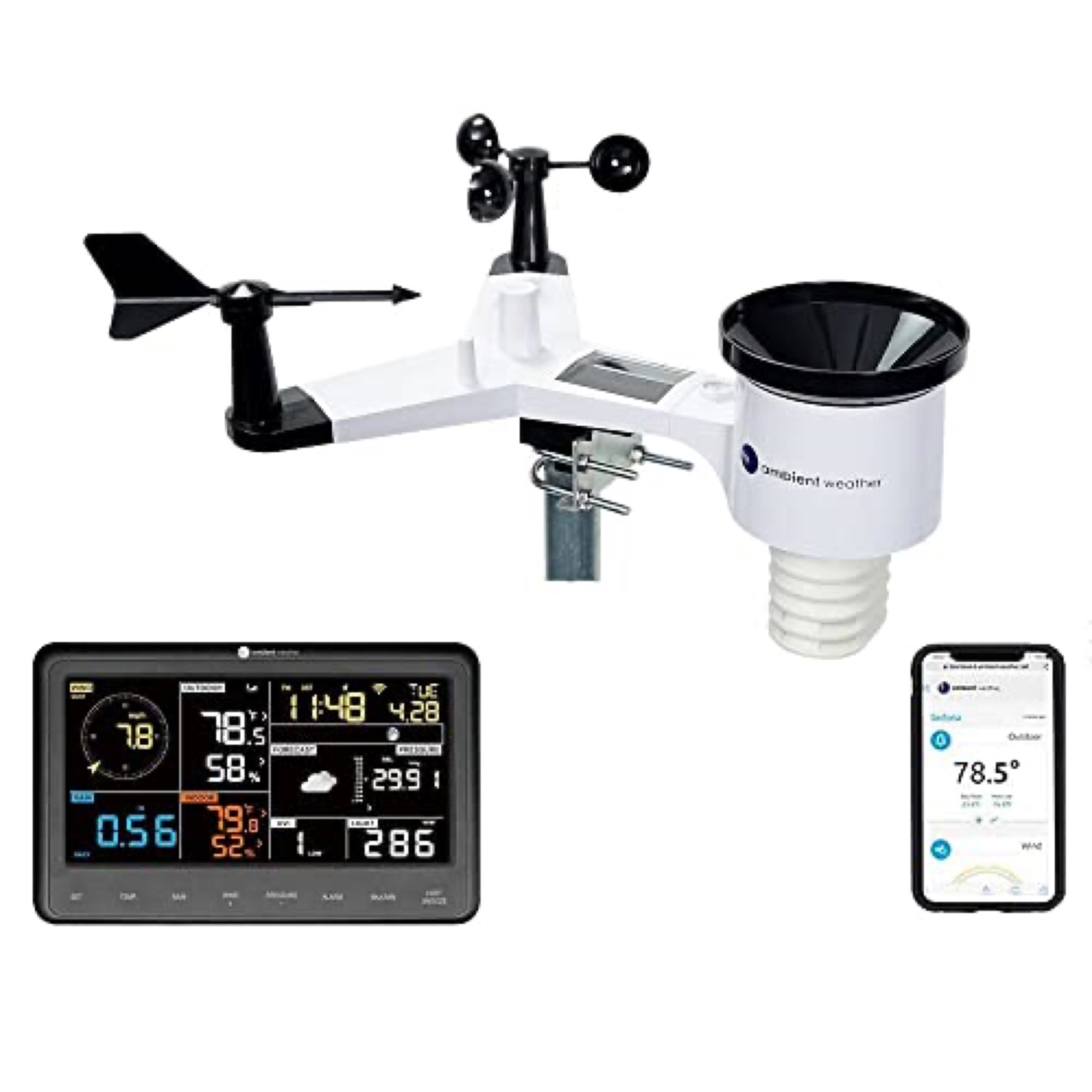
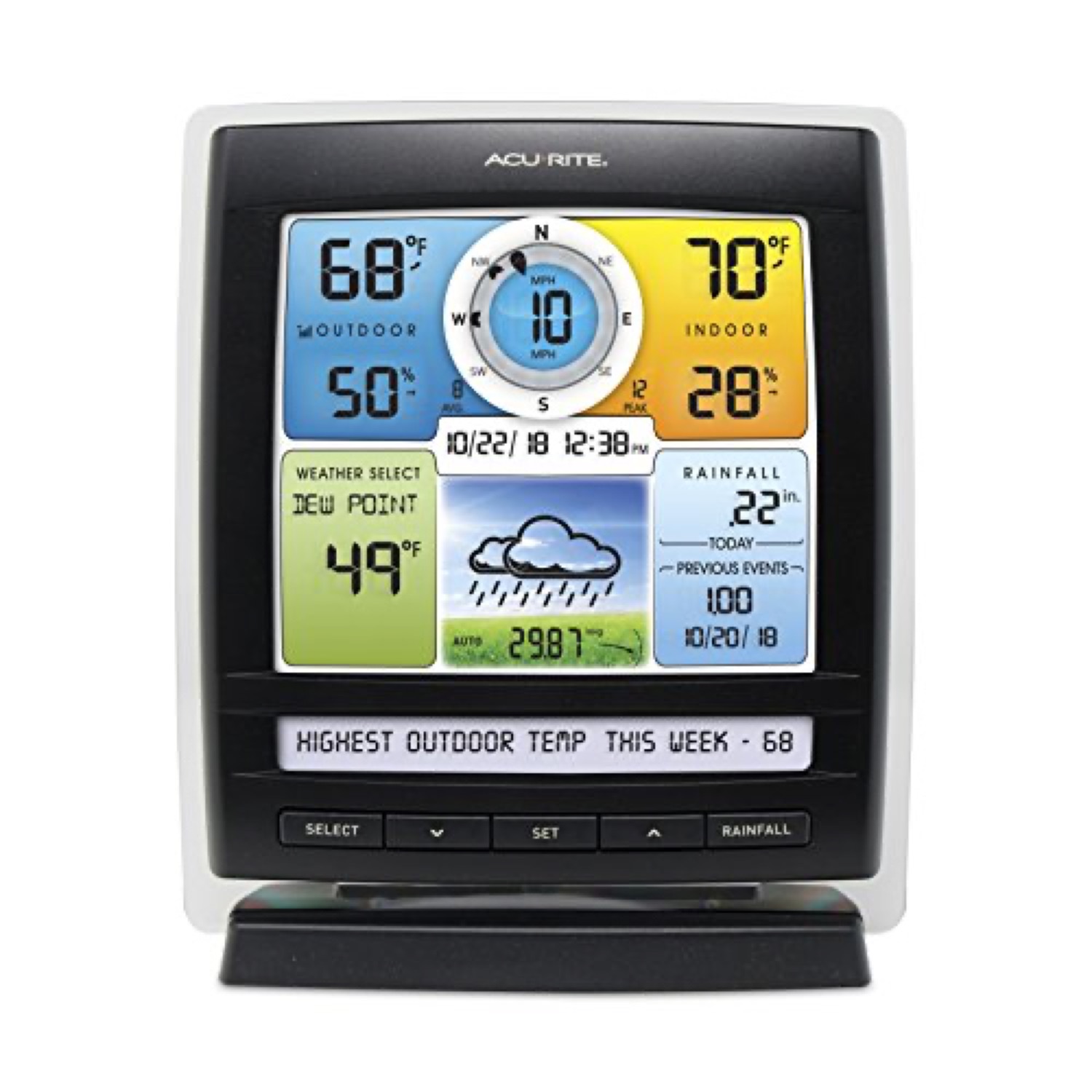
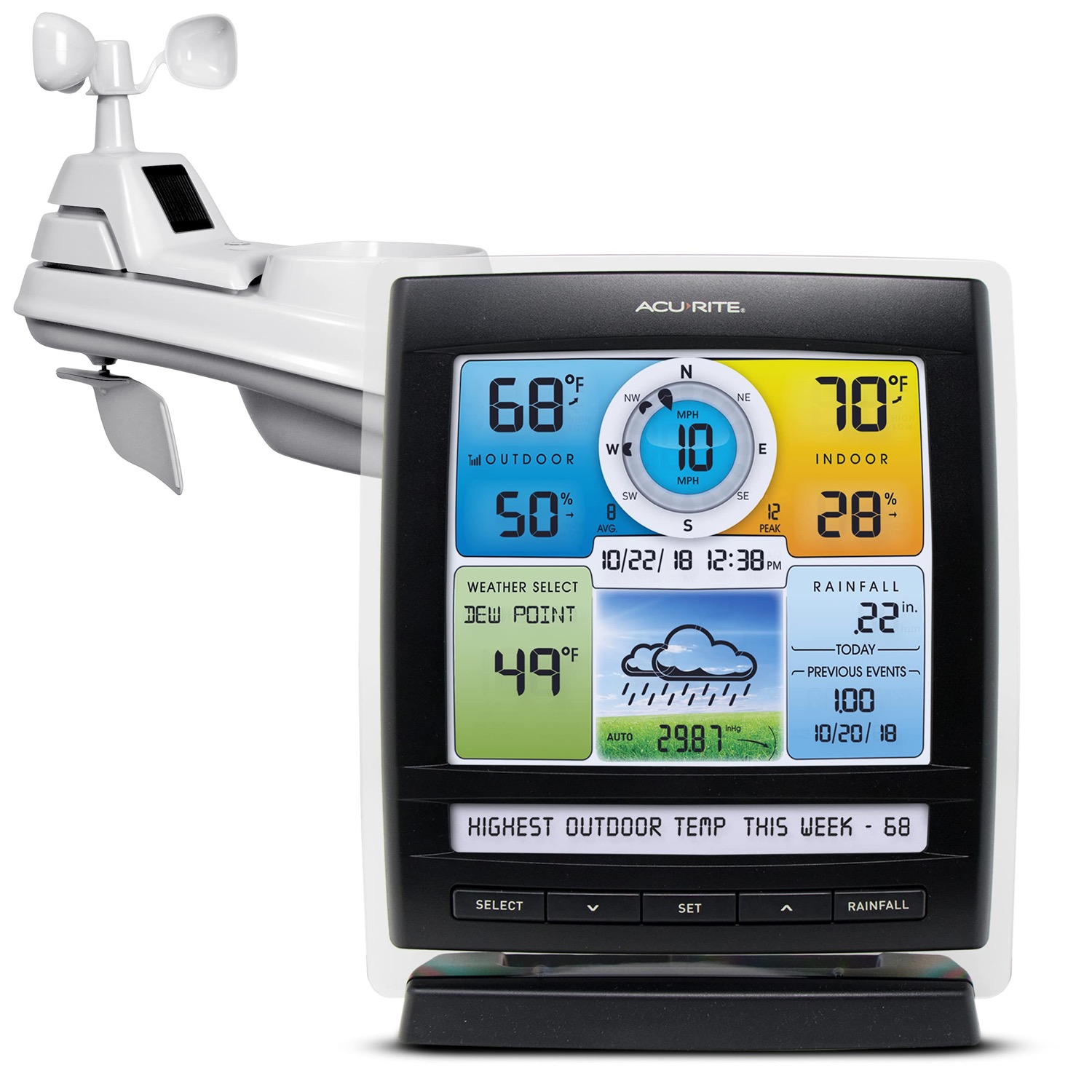
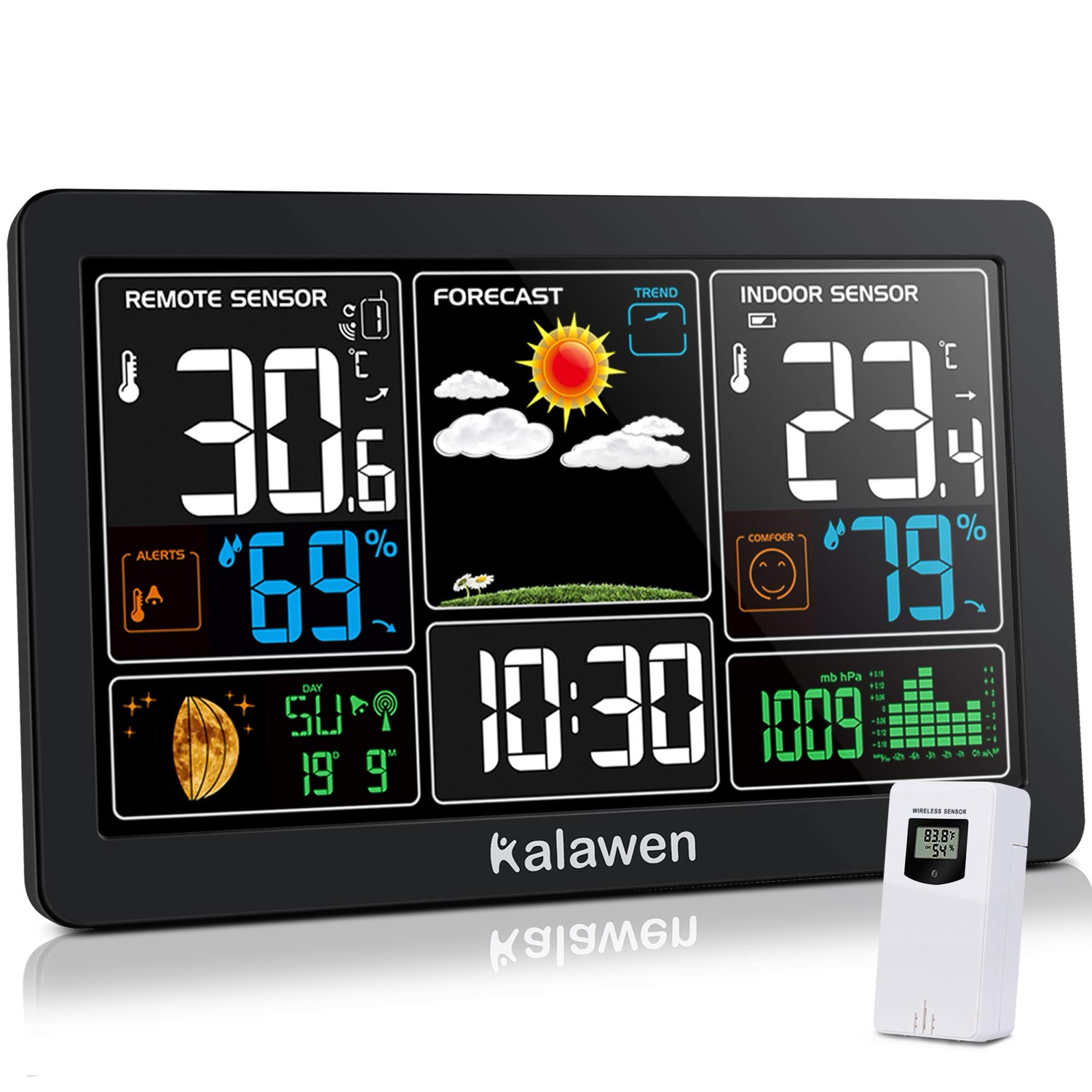
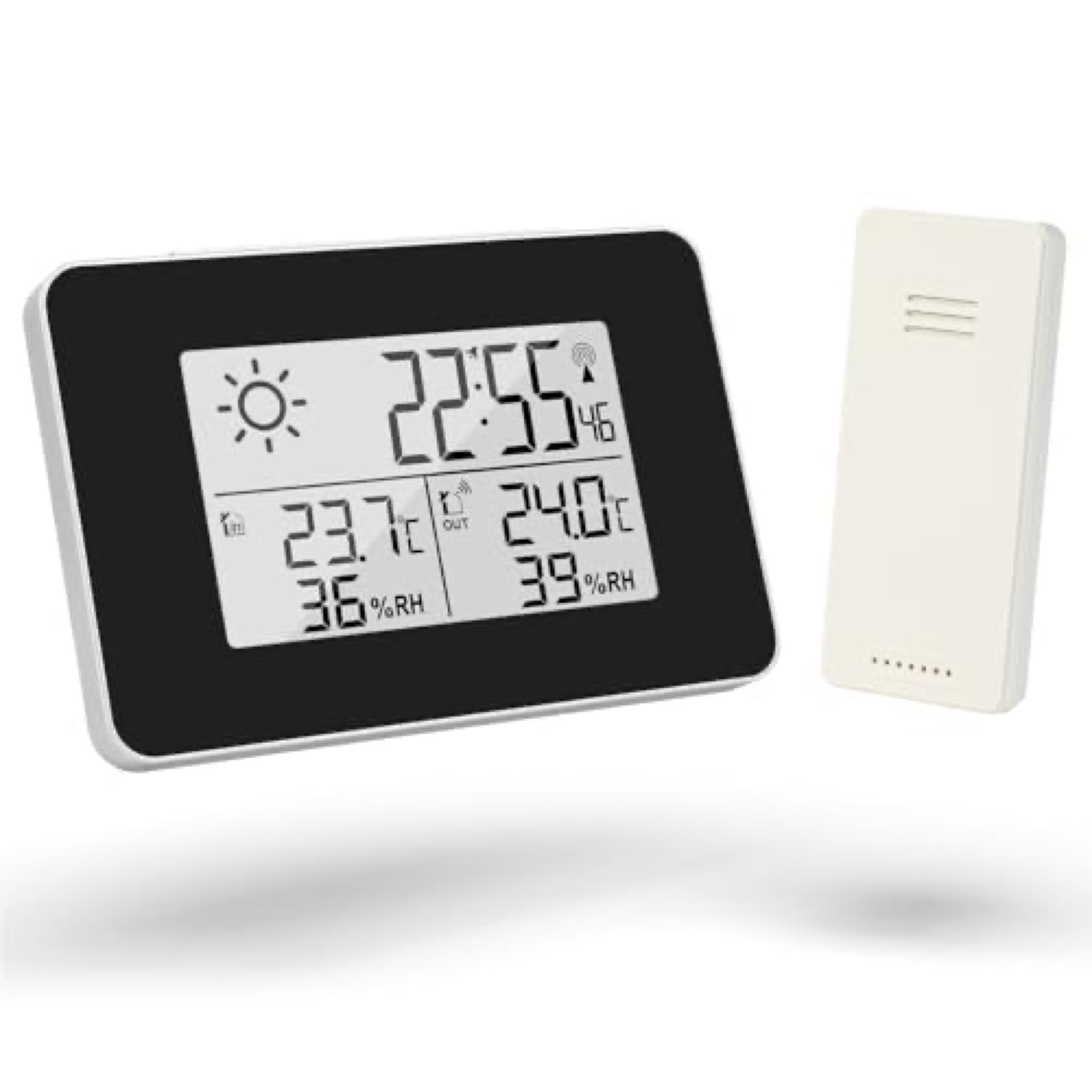
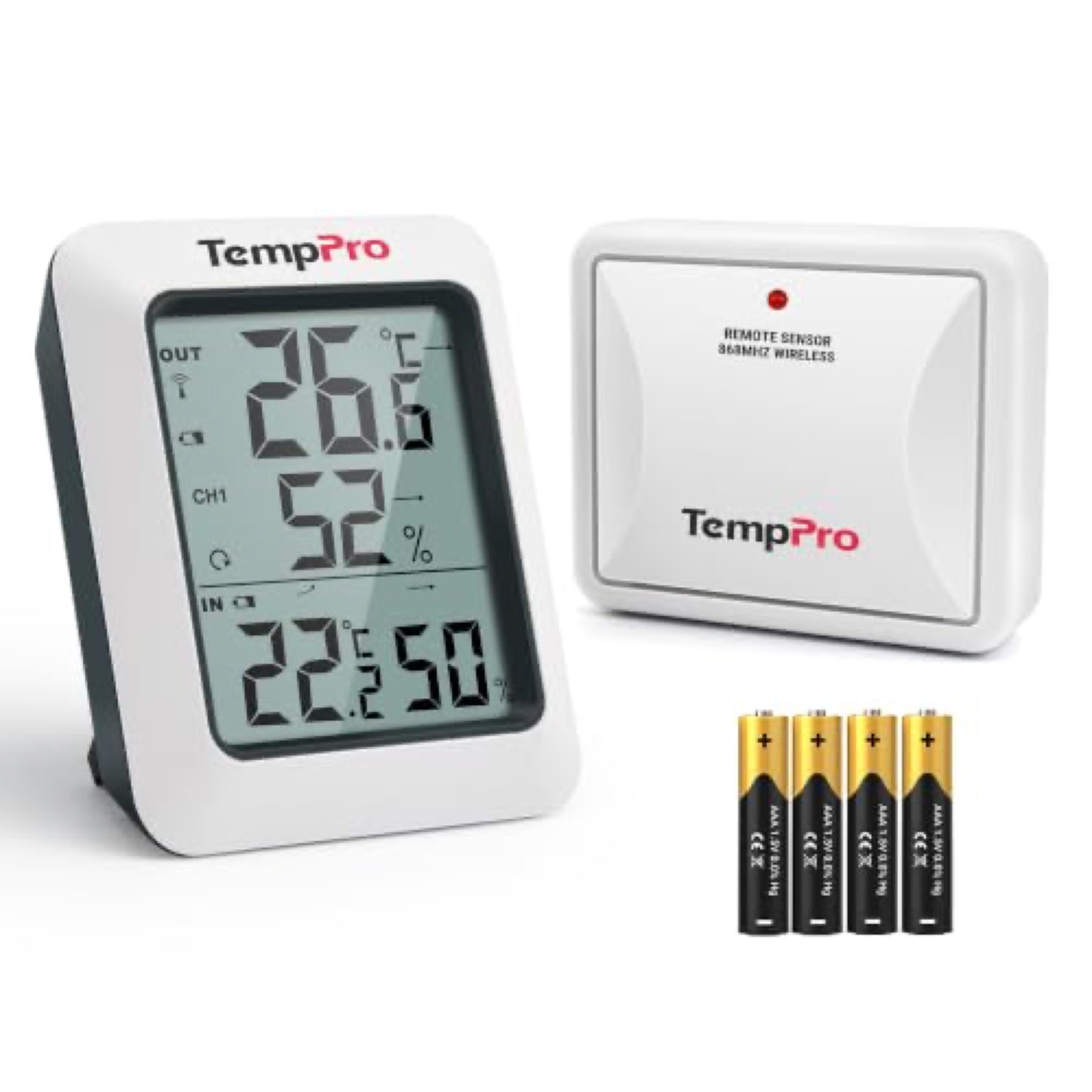
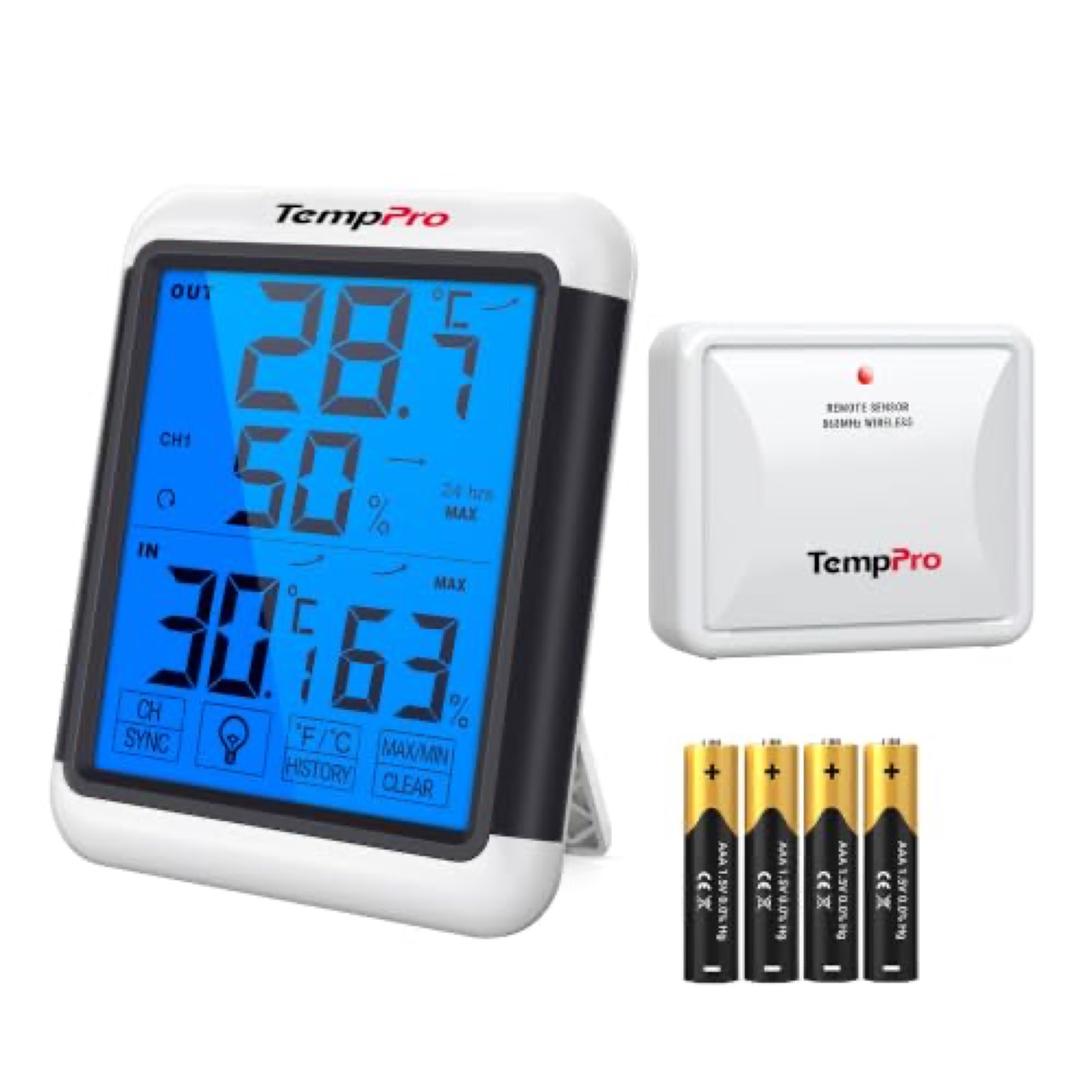
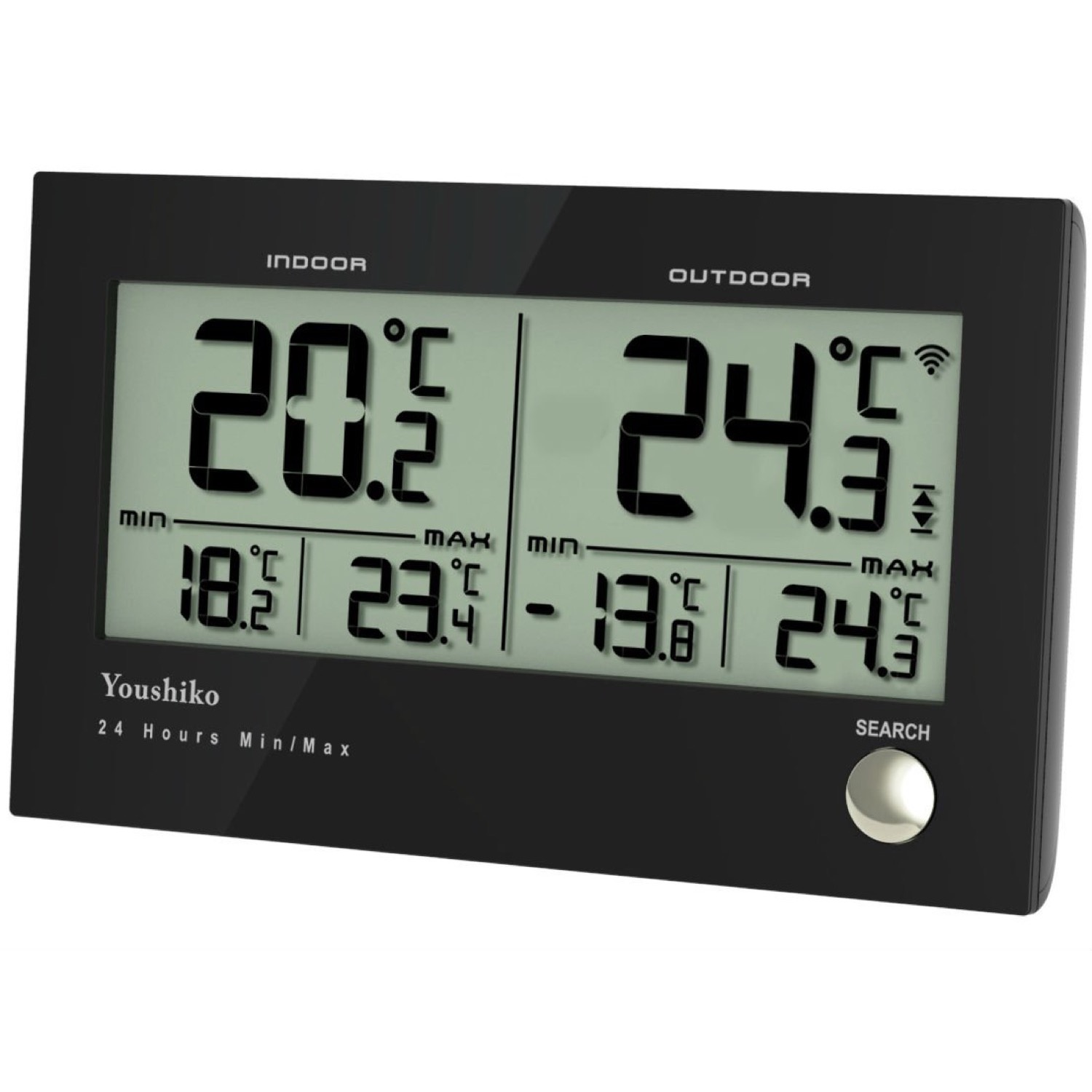
Start with the readings you'll actually use. If you only care about how warm it is inside and out, a simple indoor/outdoor thermometer is all you need. Add humidity and you can spot damp rooms and greenhouse conditions. Add a barometer and the station gives its own local forecast and a frost alarm. Only the fuller 5-in-1 and WiFi stations measure wind, rain, UV and pressure — worth it for enthusiasts, overkill for a hallway. Each product page lists exactly what it reads.
Sensor range and where it will go
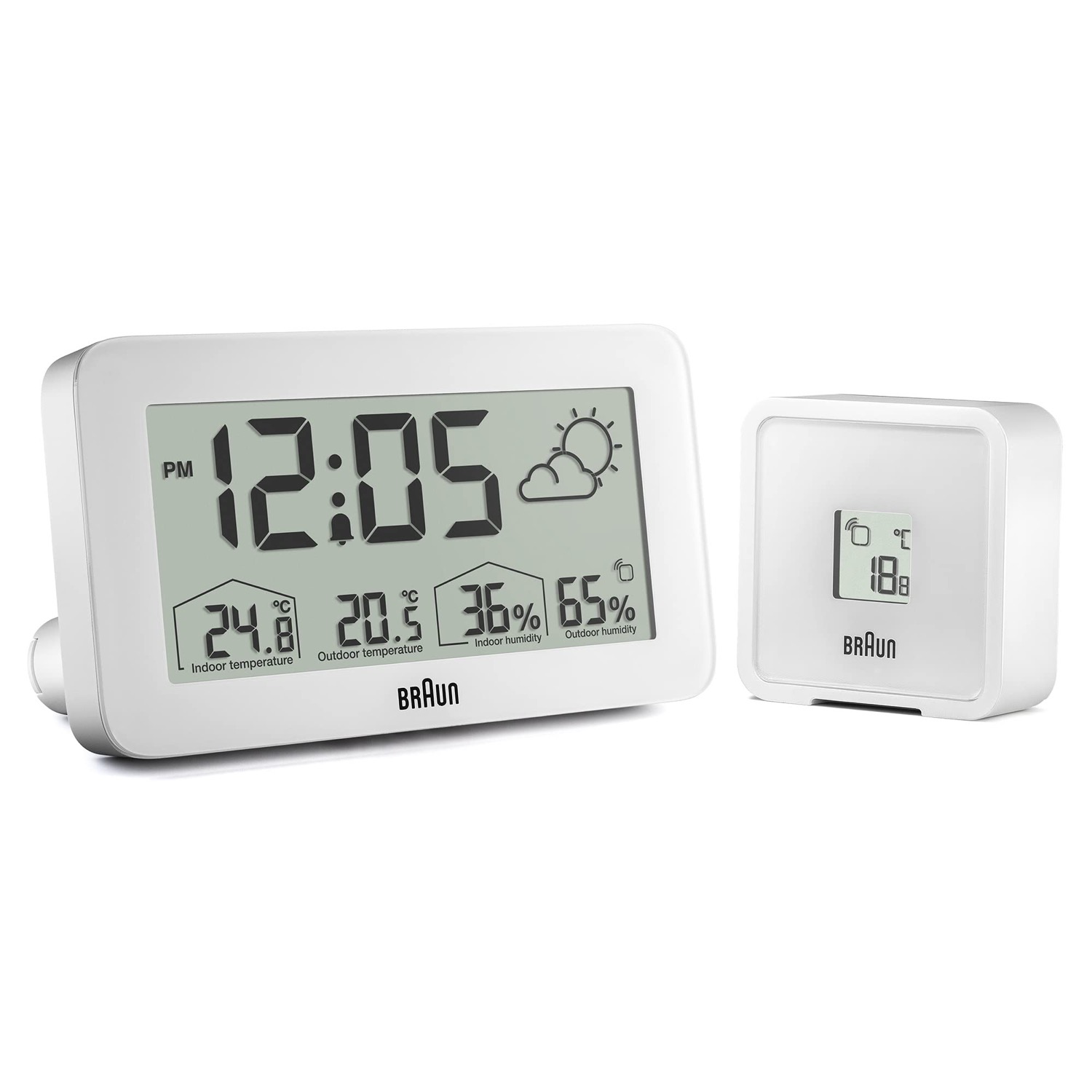
The outdoor sensor talks to the display by radio, and range matters. Compact stations reach around 30 metres; longer-range models stretch to 100–150 metres in open air. Walls, metal and other electronics all cut that down, so measure the real distance to where the sensor will sit — the greenhouse at the bottom of the garden, the detached garage — and leave headroom. Wherever it goes, mount it in shade, out of direct sun and driving rain, or the outdoor temperature reads high and the forecast suffers.
Display, power and clock
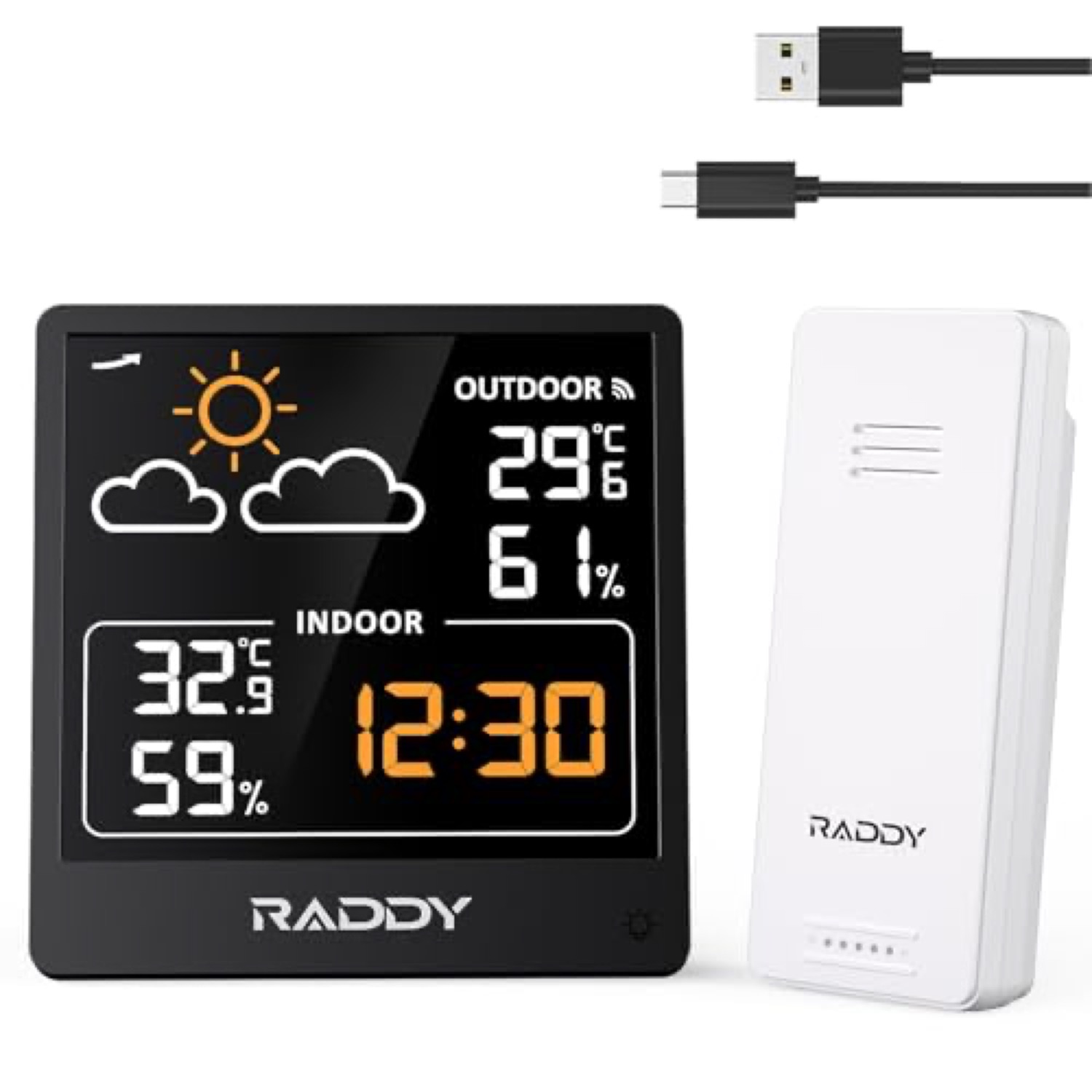
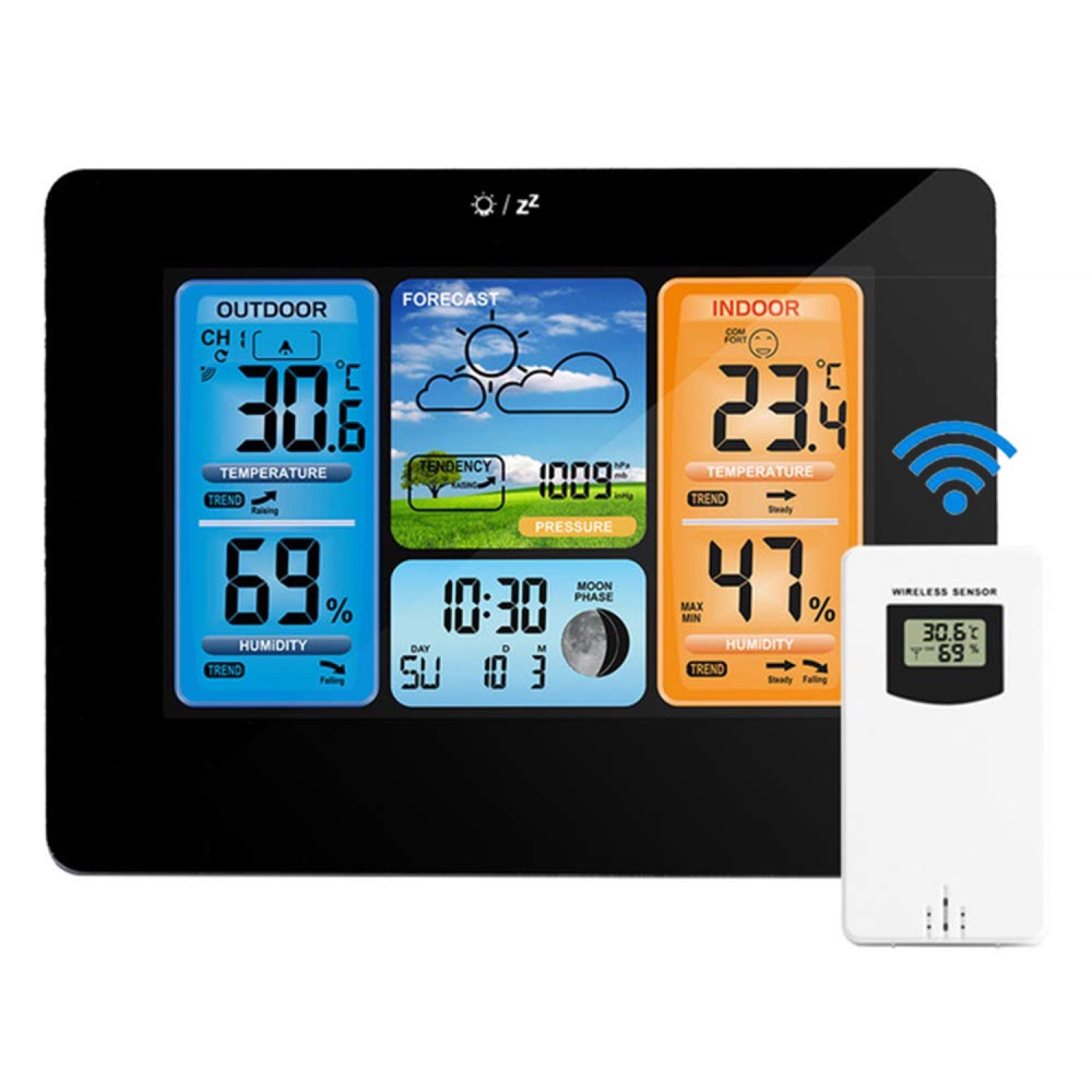
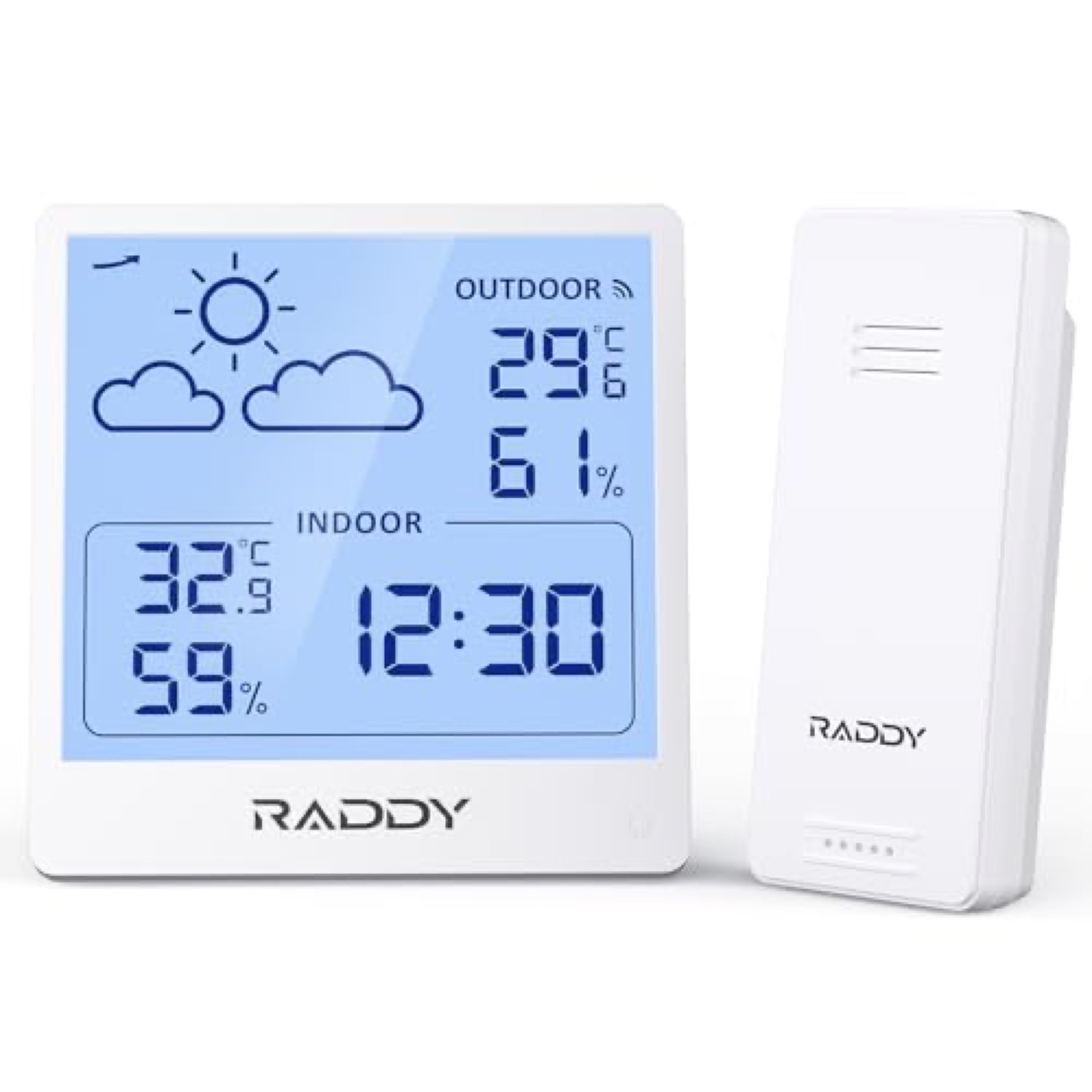
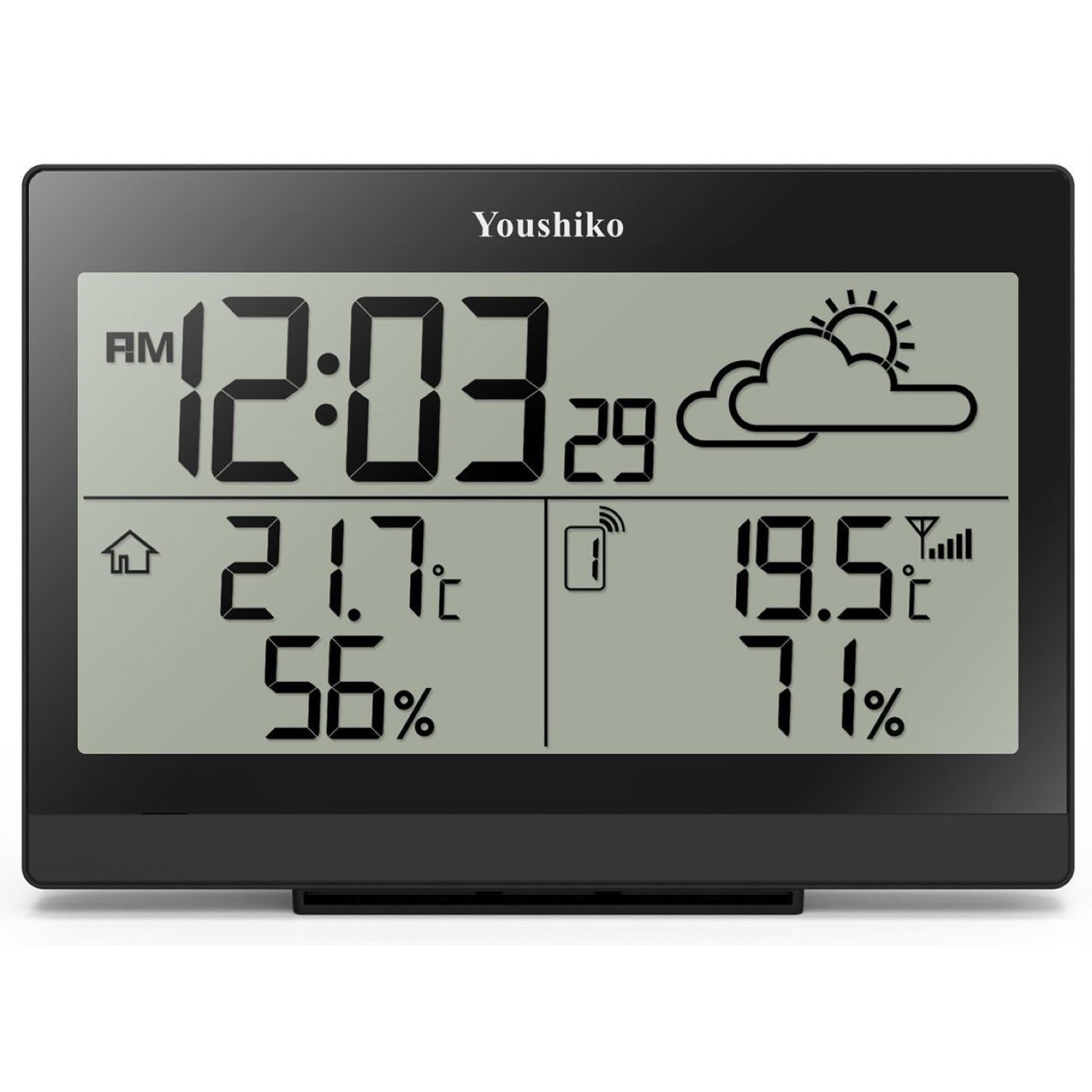
Think about how you'll read it. Big digits and a backlight help across a room; a wide-angle screen matters if you'll see it at an angle; colour consoles show more at once. For power, battery sensors that last up to a year mean nothing to plug in outside, while a mains or USB-C display keeps the screen always on. If the station will double as a clock, a radio-controlled (MSF) clock sets itself to the exact time and handles the spring and autumn changes for you.
Extras worth having — and ones you won't use
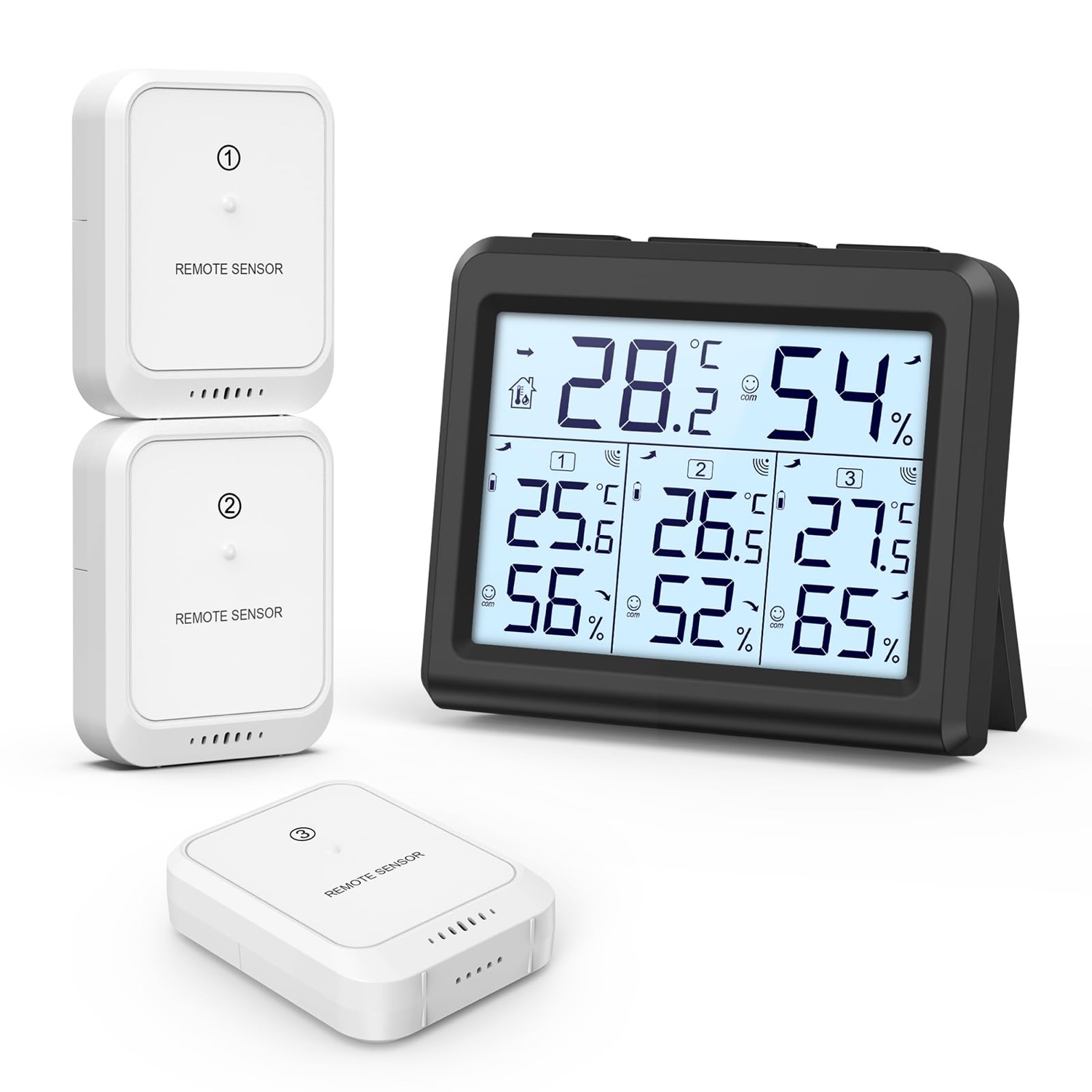
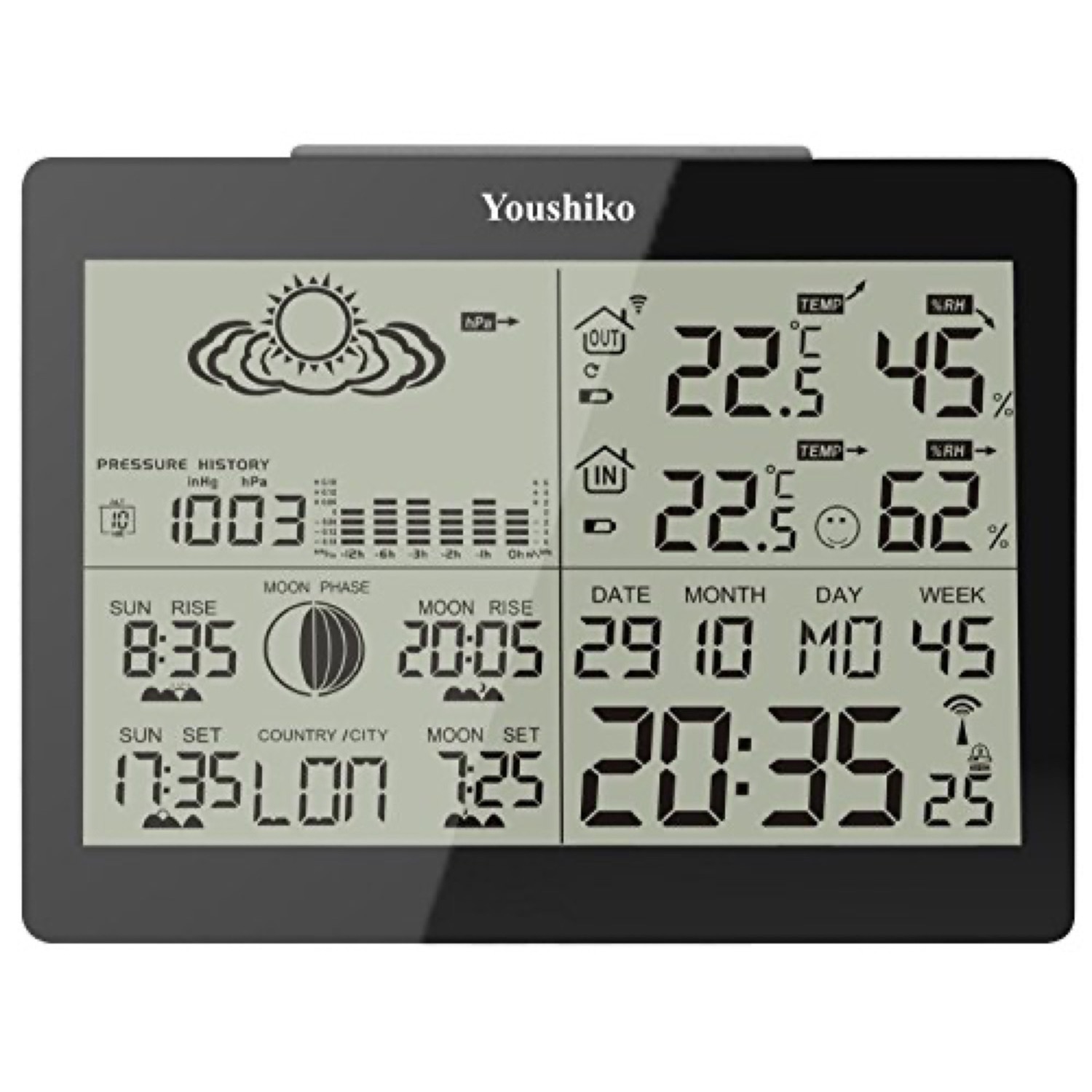
Useful extras include a frost or ice alarm for gardeners and drivers, a pressure trend chart for reading the weather, multiple sensors to watch several rooms, sunrise, sunset and moon-phase times for planning outdoor days, and WiFi for phone access and voice assistants. Match these to how you'll really use the station — a gardener values the frost alarm and sun times; a landlord values multi-room humidity; a hobbyist values wind, rain and online upload — and don't pay for features you'll never look at.